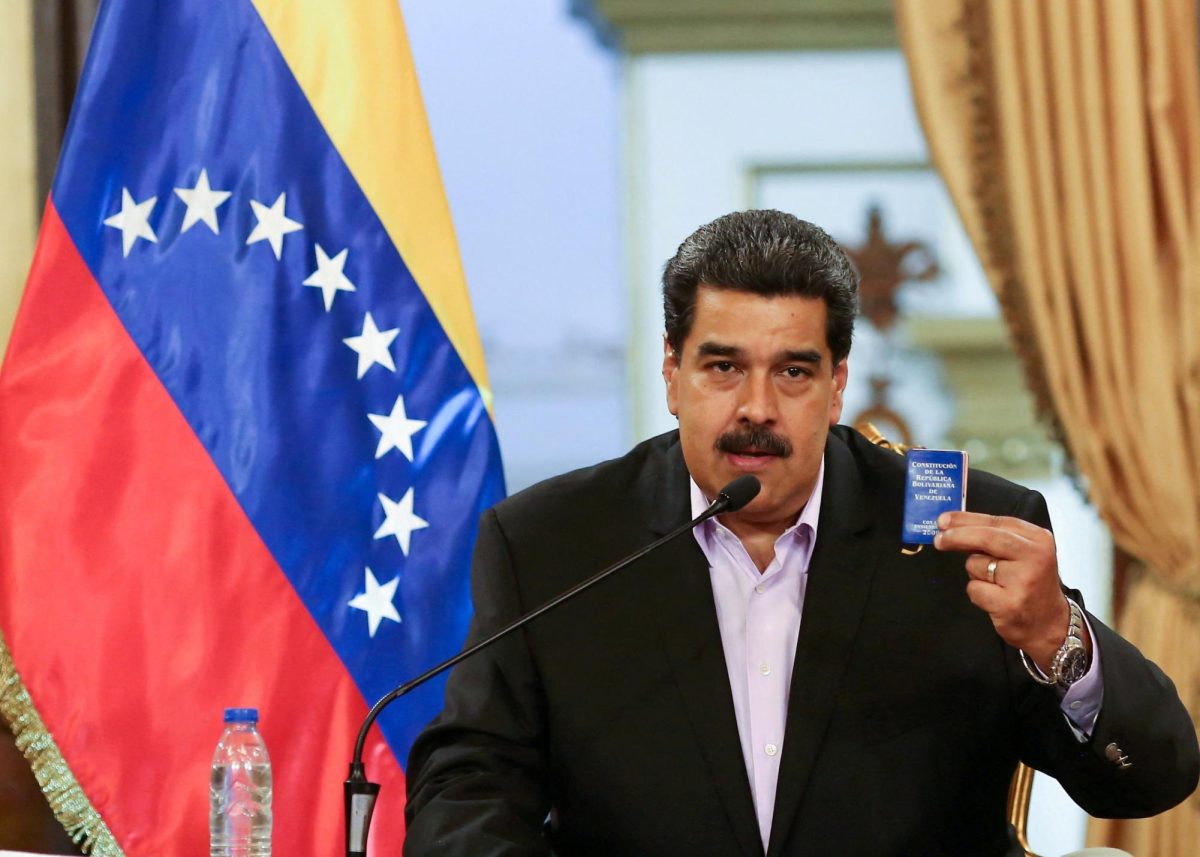
The United States launched large-scale military attacks on Venezuela’s Capital, Caracas, and surrounding areas on January 3, 2026 in an operation known as “Absolute Resolve.” President Donald J. Trump announced that specialized U.S. forces captured Venezuelan President Nicolas Maduro and his wife, Cilia Flores, who were subsequently transported to New York and charged with multiple crimes. This dramatic escalation has raised serious questions regarding the legitimacy of President Trump’s actions, the future of Venezuela’s government, and ongoing disputes over oil and economic control.
The operation involved Delta Force special operations troops and support from the Central Intelligence Agency. It showed that the United States was trying to take more control after a pressure campaign that began in September 2025. That campaign reportedly followed U.S. military strikes on suspected drug-trafficking vessels in the Caribbean and near Venezuelan waters, attacks that resulted in eleven deaths. These preemptive strikes, along with increased attention on Venezuela, caused many politicians to question what President Trump’s real goal was. Trump claimed that the United States would effectively “run” Venezuela, while Secretary of State Marco Rubio stated that the U.S. would maintain a strong military presence to ensure stability during a transition of power. At the same time, Trump rejected cooperation with democratic opposition leader Maria Corina, leaving uncertainty over how leadership would change following Maduro’s removal.
Trump has also repeatedly accused Venezuela of trafficking vast amounts of cocaine into the United States. His administration charged Maduro with leading Cartel de los Soles, an alleged drug-trafficking network accused by U.S. officials of moving cocaine through Venezuela. The White House justified the operation under the president’s Article II constitutional powers, arguing that Maduro’s government posed a direct threat to U.S. national security. However, many lawmakers questioned these claims, arguing that there is lack of evidence linking Maduro personally to cartel activity or terrorism. Critics also raised concerns over civilian casualties resulting from U.S. strikes on suspected trafficking vessels, noting that these actions may have violated international law. Therefore, Congress sought to limit the president’s powers.
Complicating the situation further is Venezuela’s economic collapse, driven by corruption and the decline of its oil industry. Under former President Hugo Chávez, oil revenues were used to fund social programs, contributing a reported fifteen percent reduction in poverty. However, over time, economic mismanagement, corruption, and over-reliance on oil led to severe economic deterioration, conditions that worsened under Maduro’s leadership.
In turn, Trump’s second justification for the intervention centered on Venezuela’s oil reserves. He argued that U.S. companies should develop the country’s oil industry and recover funds allegedly stolen by the Chavez and Maduro regimes. His proposed strategy included seizing Venezuelan oil assets, controlling oil revenues, and encouraging U.S. energy companies to invest in the country. Critics claim that this plan is unrealistic, as Venezuela’s interim leadership may resist U.S. control over oil. Further U.S. intervention also risks escalating conflict and provoking backlash.
Trump’s aggressive actions including military strikes, the capture of Venezuela’s president, and expanded sanctions have intensified instability in the region. These measures have left Venezuela’s political future unclear and placed strain on its economy, raising concerns over the long-term consequences for Venezuelan citizens and regional stability.