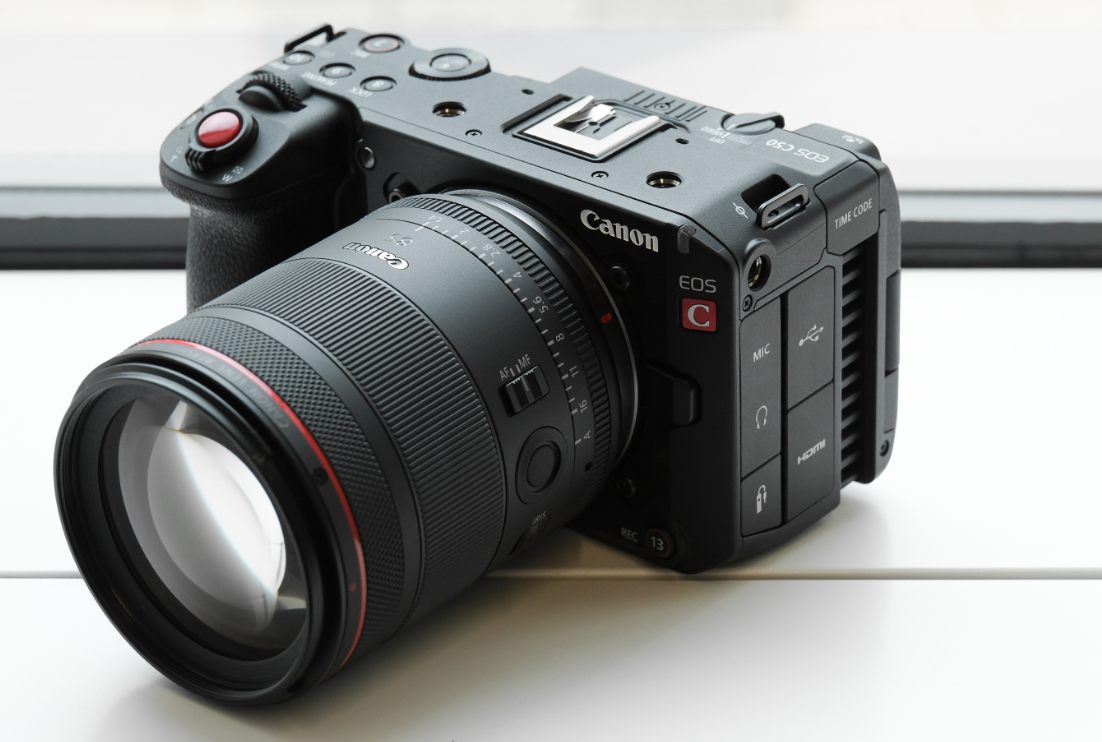
Last month, Canon introduced the new EOS C50, a compact cinema camera meant to take the lead against Sony in Camera technology. The C50 features a 32-megapixel full-frame sensor and can shoot 7K raw video at 60 frames per second. It also supports “open gate” recording, which uses the full sensor area in a 4:3 ratio, something that no camera Sony has manufactured can achieve.
Many are claiming that the C50 is the direct competitor to Sony’s most popular cinema camera, the FX3. The Sony FX3 is built around a full-frame sensor that emphasizes strength in low light and has a very compact and sleek design, made for ease of use and accessibility.
What made the Canon C50 stand out is how many features it packs into a small body. It comes with dual base ISO settings (800 and 6400), good for shooting in both bright and dark locations. It also includes the ability to shoot 4K at 120 frames per second for slow motion, and it supports a modular top handle with pro audio inputs. The C50 is also notable for its high auto focus advantages and advanced capabilities. “It locks onto faces and tracks through movement with ease, saving shots that would have been risky to pull manually,” Ben Bagley, a cinematographer, said.
Some reviewers have already called the C50 the “FX3 killer,” saying it outdoes older Sony models. In price, the C50 is also ahead, planning to retail at about $3,899, which undercuts or matches many offers for the FX3. For filmmakers who want modern specs in a compact body, the C50 offers a strong alternative that may leave the FX3 in shambles. “If you’re only ever going to shoot 4K, the FX3 does a fine job with none of today’s bells and whistles. But the C50 does everything, including 4K, bigger and better,” James Artaius, a professional photographer and journalist, said.