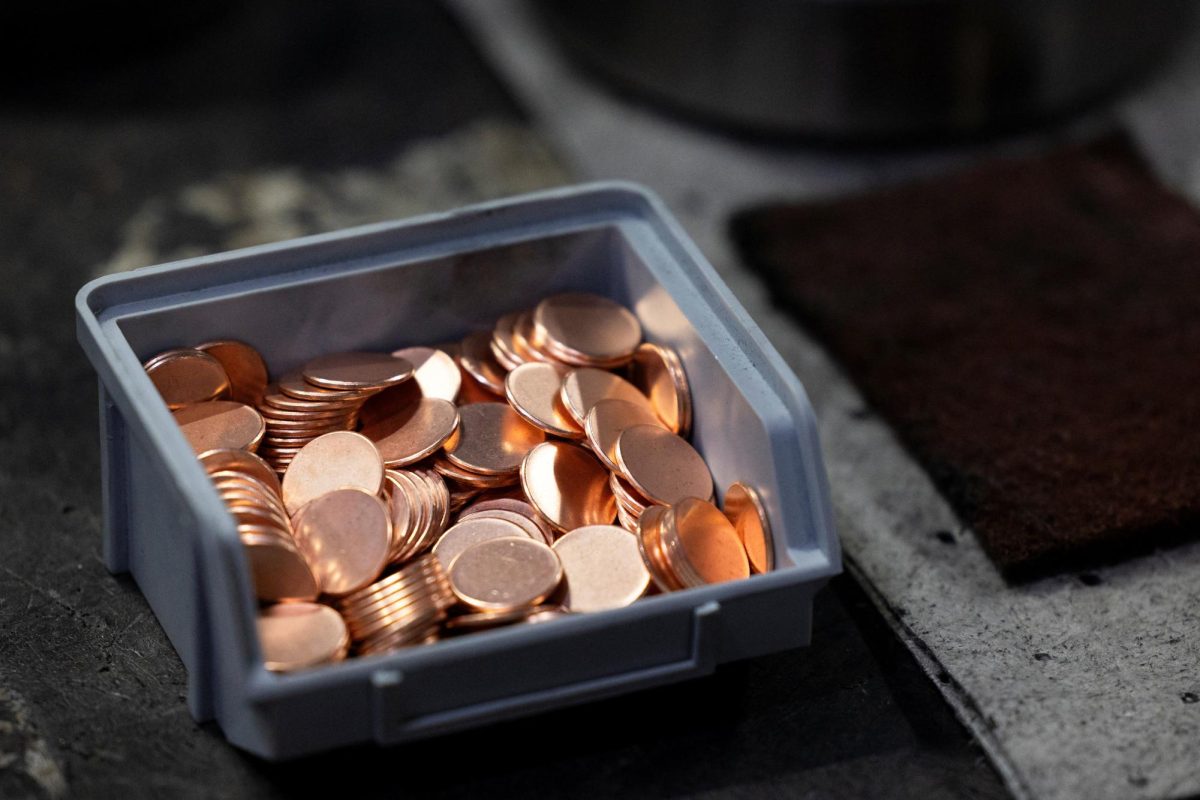
After 232 years in circulation, the copper penny met its end on November 12, when the U.S. Treasury Department halted all future production. The decision followed President Trump’s conclusion nine months earlier that the coin had become too costly to produce as each Penny required nearly four cents to produce. Ending production is projected to save taxpayers more than $50 million annually.
The announcement sent waves across the nation as Americans reflected on the penny’s legacy. First minted in 1792, the coin has survived wars, depressions, and countless redesigns. The U.S. penny primarily represents Abraham Lincoln and the ideals of American opportunity, unity, and history. Lincoln’s image on the coin since 1909 symbolizes national resilience, while the various designs on the reverse side have represented the nation’s history, showing wheat stalks, the Lincoln Memorial, and the current Union Shield.
In the 2024 fiscal year, over 3.2 billion pennies were produced and distributed. It’s estimated that the one cent penny costs roughly 3.7 cents to produce, resulting in an annual $23.3 million dollar loss. In substitution for the penny, prices will be rounded up to the nearest 5 cent value, turning the spotlight over the 5-cent nickel. While it is more expensive to produce than the penny, at approximately 13.8 cents per coin, it is still less costly than a penny when factoring in the 400% difference in value versus cost.
The final five pennies have been stamped with a unique omega mark, with plans to auction these off for hundreds of thousands of dollars in the future. Experts have predetermined that the rarity and historical significance of these last five coins will make them the most valuable modern U.S. currency ever released.